
When temperatures rise and cooking starts to feel like a chore, cold noodle bowls become an especially appealing option. They’re refreshing, plant-based, and flexible enough to suit a wide range of diets. More importantly, they lend themselves perfectly to meal prepping — a key theme highlighted in a recent cooking video by content creator Mark Thompson.
Thompson, who runs the YouTube channel Sauce Stache, describes his version as “the easiest, healthy plant-based meal prep I’ve ever made.” His approach is built around simplicity: cook one main base ingredient, keep the rest raw and fresh, and assemble a high-protein meal that can be stored in the fridge for several days without losing quality.
A Meal Prep Formula Designed for Convenience
At the heart of the recipe is pasta — but not just any standard variety. Thompson prefers a high-protein spaghetti that retains its firmness after cooking. This detail, he explains, is essential for meal prep success.
“I just like this particular pasta because after it cooks, it stays al dente,” he notes.
That texture becomes especially important when the dish is stored for multiple days. Softer noodles tend to break down in the fridge, but firmer pasta holds its structure, keeping the bowl enjoyable even on day three or four.
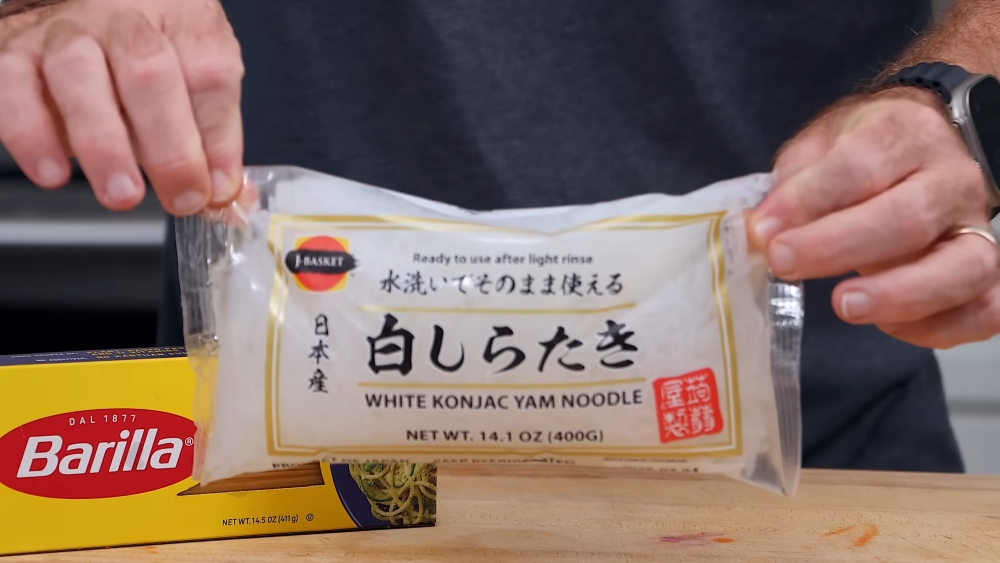
For those looking for an ultra-low-calorie alternative, Thompson also suggests konjac noodles. These contain almost no fat or carbohydrates and can be useful for quick, immediate meals. However, he points out that they don’t hold up as well over time.
“These work really good if you’re making this recipe like on the spot,” he explains. For longer storage, he recommends sticking with traditional or high-protein pasta varieties.
The choice ultimately depends on intention: whether the goal is light, instant eating or structured, longer-lasting meal prep.
A Lighter Approach to Peanut Sauce
A major component of the dish is its sauce — a reimagined peanut dressing designed to be flavorful without being heavy.
Instead of traditional peanut butter, Thompson uses powdered peanut butter, a lower-fat alternative made from defatted peanuts. He emphasizes the nutritional difference:
“Peanut butter powder is 60 calories, two grams of fat, so it’s literally half the calories and … a fifth of the fat that’s in regular peanut butter.”
When mixed with water, the powder rehydrates into a creamy base that closely resembles traditional peanut butter in taste and texture.
He builds the sauce with a combination of soy sauce, rice vinegar, sesame oil, maple syrup, fresh ginger, and garlic. The result is a balanced dressing that combines sweetness, acidity, and umami without feeling overly dense or oily.
“Honestly, even if you’re not making this cold noodle salad, this sauce is incredible,” Thompson adds.
Fresh Vegetables Add Texture and Balance
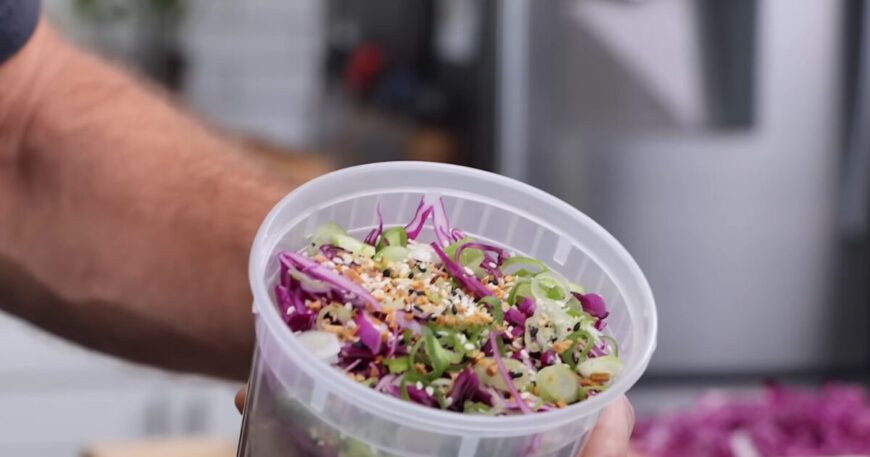
Once the noodles are cooked, they are immediately cooled in ice water to halt the cooking process and preserve their firmness. From there, the focus shifts to fresh, raw ingredients.
Thompson incorporates a variety of vegetables to build texture and nutritional balance:
- Carrots sliced into thin matchsticks for crunch
- Cucumber cut into noodle-like ribbons for freshness
- Finely shredded cabbage for structure and bite
- Green onions for a sharp, aromatic finish
To increase protein content, he adds chickpeas and tofu. The tofu is intentionally prepared in a rustic way rather than a structured form.
“We could just crumble this up … I just liked it to be kind of like almost like a feta,” he explains, highlighting how texture can dramatically change the overall feel of the dish.
A Balanced Plant-Based Meal That Lasts
The final result is a layered bowl that combines soft, chilled noodles with creamy sauce and crisp vegetables. Each component plays a distinct role: the noodles provide substance, the sauce adds richness, and the vegetables bring freshness and crunch.
This contrast is what makes the dish particularly effective for meal prepping. It maintains its structure and flavor for several days, making it a practical option for anyone looking to simplify weekday meals without relying on heavily processed convenience foods.
In the end, Thompson’s recipe demonstrates how plant-based cooking doesn’t have to be complicated to be satisfying. With a few strategic ingredient choices, it’s possible to create meals that are both nutritionally balanced and genuinely enjoyable — even days after they’re prepared.

